As a critical component in modern industrial cooling, the closed cooling tower is designed to isolate the circulating water from external air, ensuring water purity and stable operation. Understanding its system composition is the foundation for mastering its working principle and maintenance. Broadly speaking, a closed cooling tower system consists of four major subsystems: the heat exchange coil group, the spray water circulation system, the air circulation system, and the electrical control system. These four subsystems work in synergy to form an efficient, closed cooling cycle.
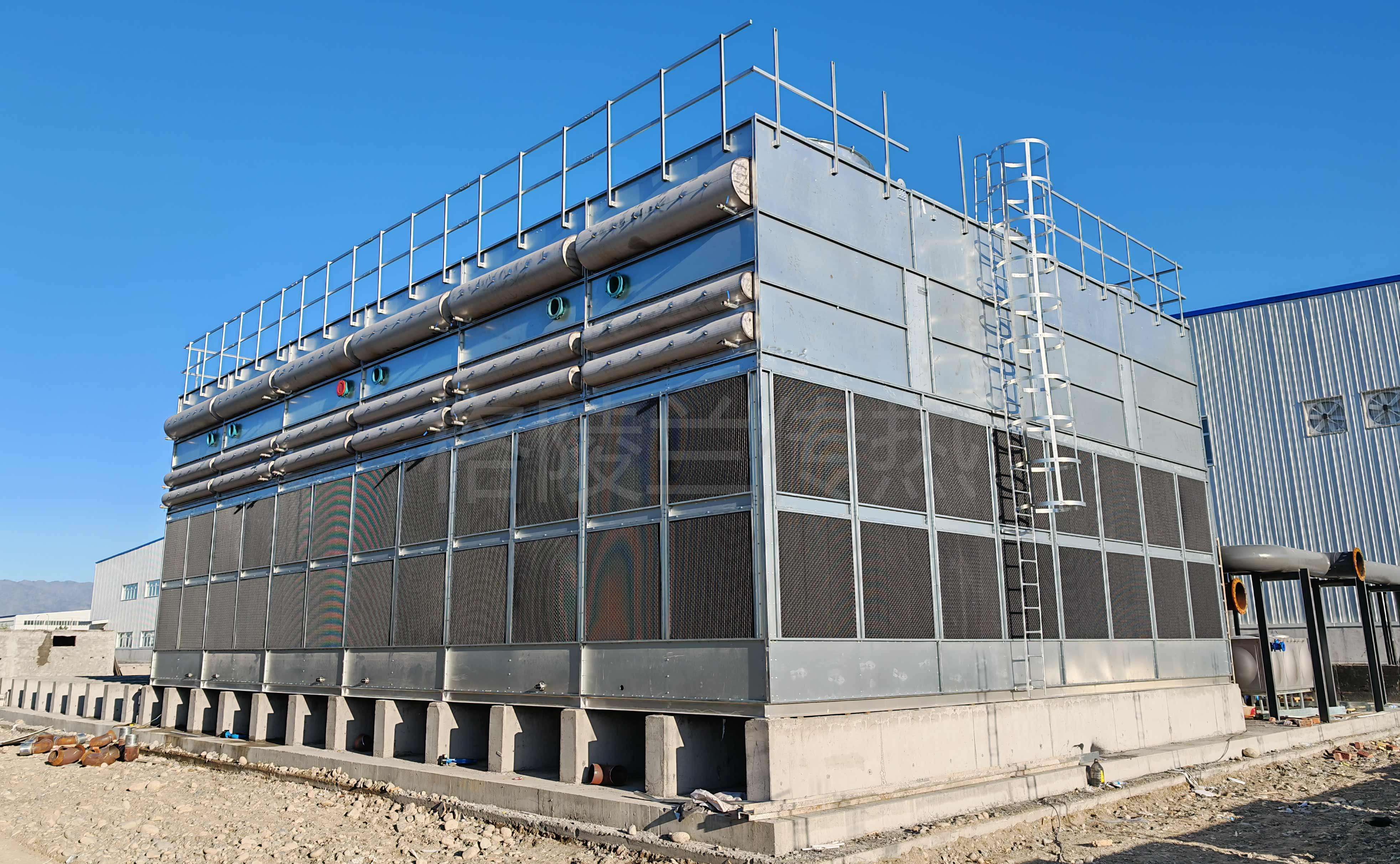
First, the heat exchange coil group is the core of the entire system. It is usually wound from high-quality copper tubes or stainless steel tubes, through which the process medium that needs cooling (such as softened water, oil, or chemical fluids) flows. The medium to be cooled circulates inside the tubes, and heat is transferred outward through the tube walls. Because the medium circulates in a closed loop, it neither contacts the outside air nor suffers evaporation loss, fundamentally avoiding impurities from entering and eliminating leakage.

Second, the spray water circulation system plays a key role in enhancing heat transfer. This system consists of a collection basin, a spray pump, spray nozzles, and piping. When the equipment is in operation, the spray pump delivers water from the collection basin to the nozzles above the coils, uniformly spraying it over the outer surface of the tubes to form a water film. The water film absorbs heat from the tube walls and evaporates, removing a large amount of latent heat. The unevaporated spray water falls back into the collection basin for recirculation.

Third, the air circulation system provides continuous power for evaporative heat dissipation. It is mainly composed of a fan (axial or centrifugal), a fan cylinder, and air inlet louvers. When the fan operates, it draws dry, cool outside air from the sides or bottom into the tower. The air passes through the gaps between the coils, carrying away water vapor and excess heat, and discharges it out of the tower, creating a synergistic effect of “water absorbing heat, air removing heat.”
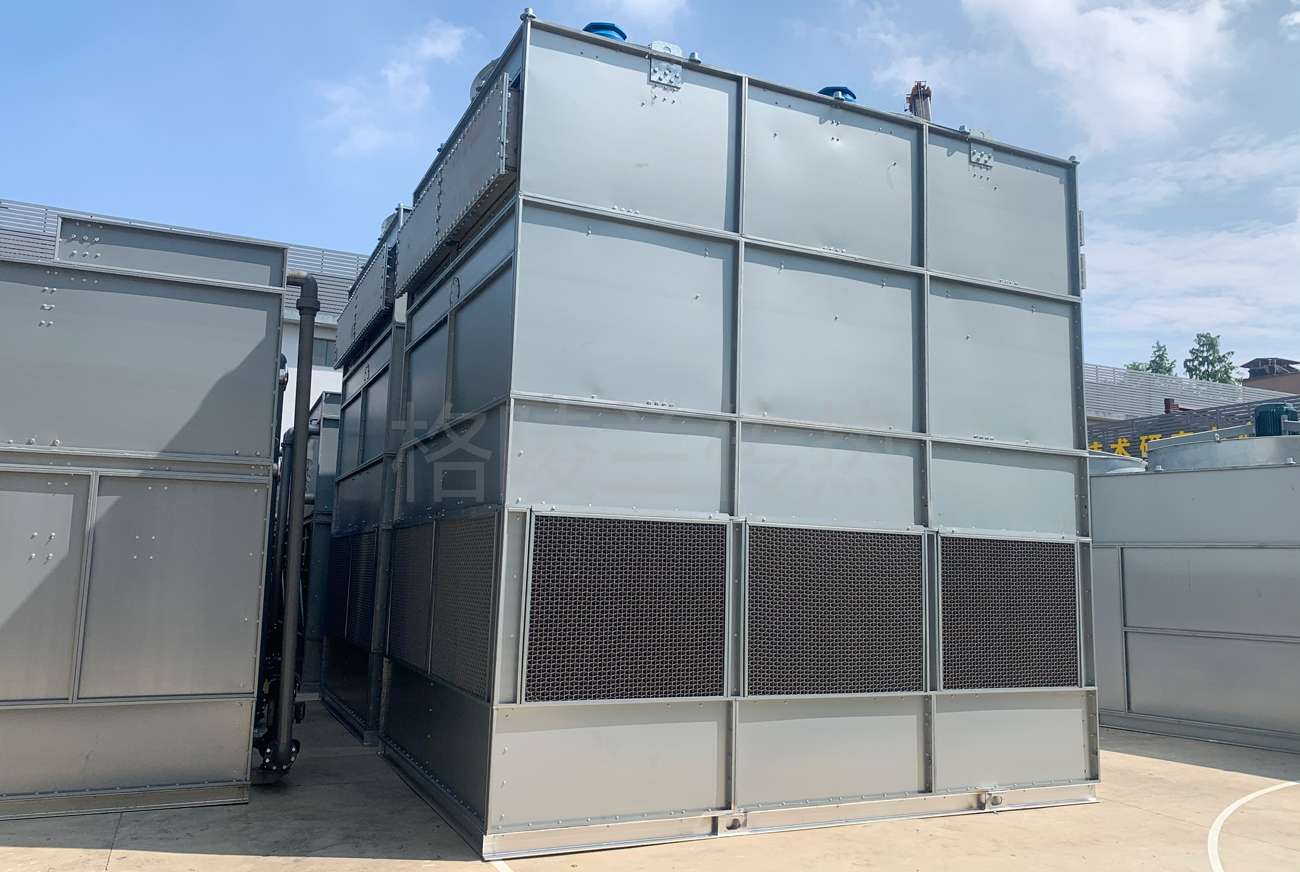
Finally, the electrical control system serves as the “brain” for intelligent operation. It includes a PLC control panel, a fan variable frequency drive (VFD), a spray pump start‑stop device, water temperature sensors, and a level control valve. Based on the actual outlet water temperature, the system automatically adjusts the fan speed or the operating status of the spray pump, achieving maximum energy savings while meeting cooling demands.
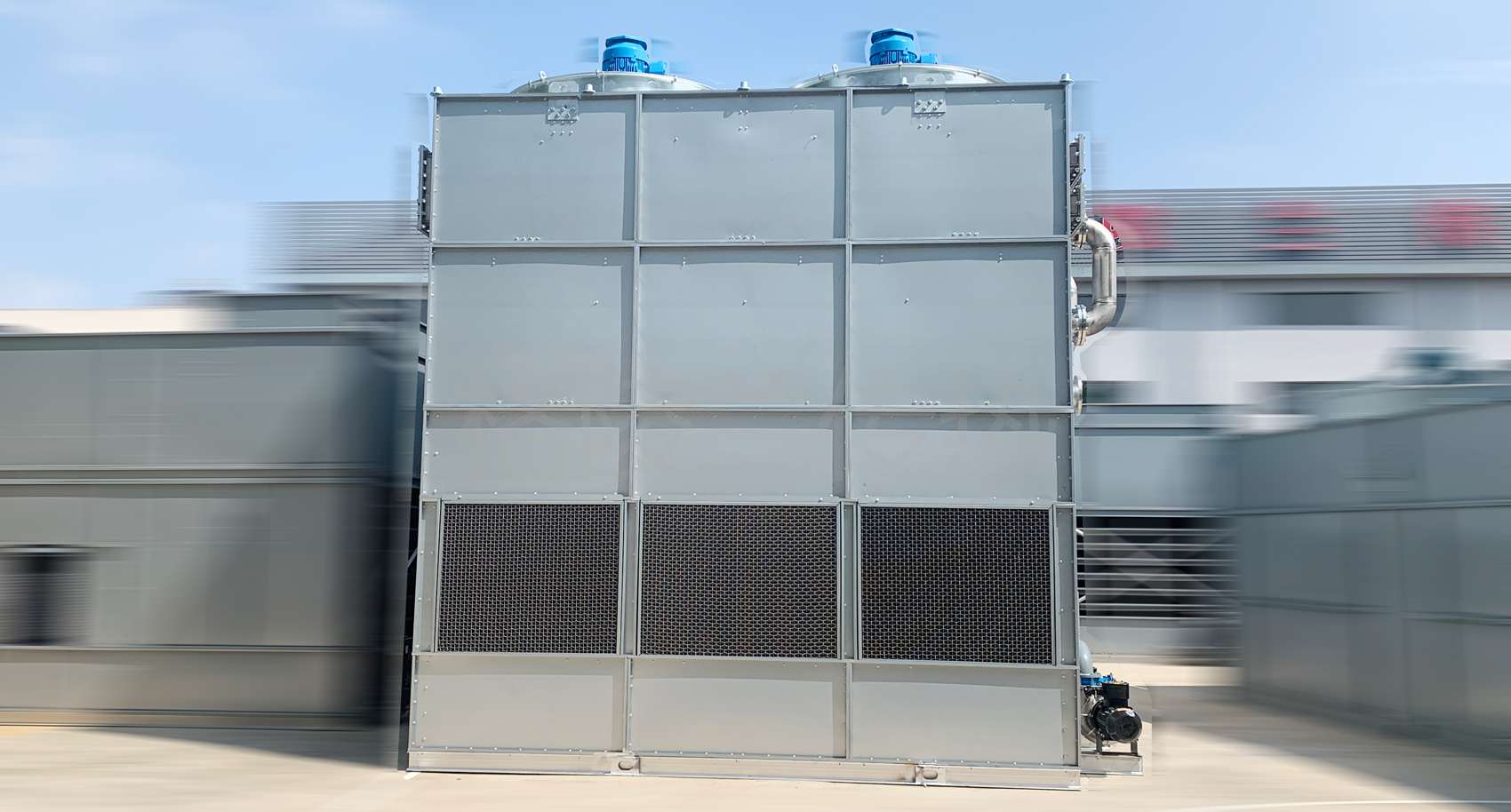
In summary, the closed cooling tower system maintains the cleanliness of the circulating medium through the closed loop of the heat exchange coils, improves heat transfer efficiency by utilizing the latent heat exchange between spray water and air, and achieves energy‑efficient operation via the intelligent control system. These four major components complement each other, making the closed cooling tower an indispensable cooling solution in industries such as metallurgy, power generation, chemical processing, and HVAC, ensuring stable production processes and extending equipment life.


